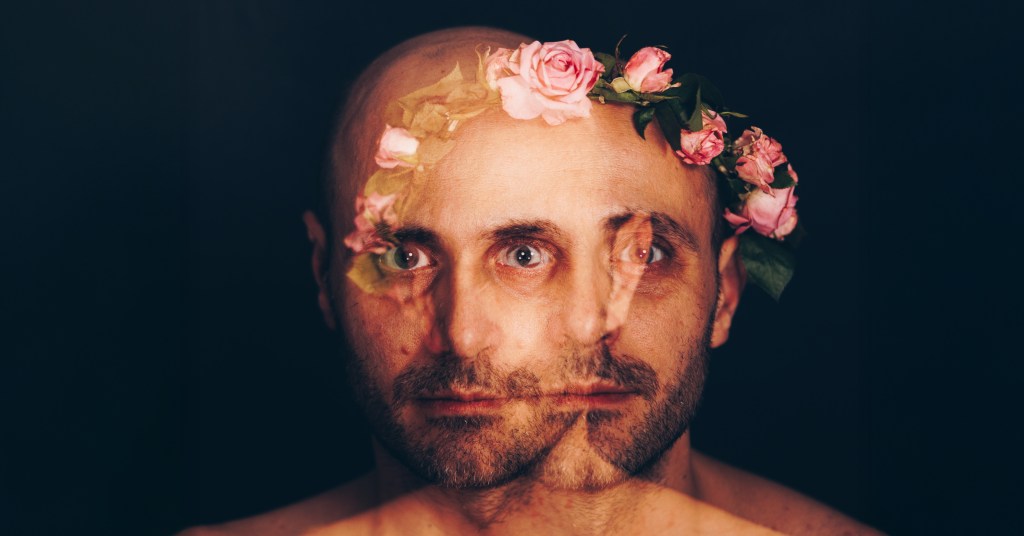
Põrmuline / The Dustborn by Liisa Hõbepappel, ensemble U:, and Eva Koldits is a bold and emotionally rich chamber opera, inspired by the ancient Estonian forest fairy tale “The Seven Brothers.” Yet, the protagonists in this story are not the traditional fairy tale figures—the brothers, maidens, bird, or old man—but rather the various states of mind that these characters embody. This opera delves into inner voices, spiritual tension, and the profound need to recognise and understand what is happening within oneself.
It’s a day’s journey from here, then a forest and then a church – my heart is in that church. The church is encircled by a high mound, and around the mound is a big black river, and the church is closed tight with iron doors. There, inside the church, is a bird, and there inside that bird is my heart. That’s why I don’t die.*
Premiere of the concert version at festival Estonian Music Days 2025


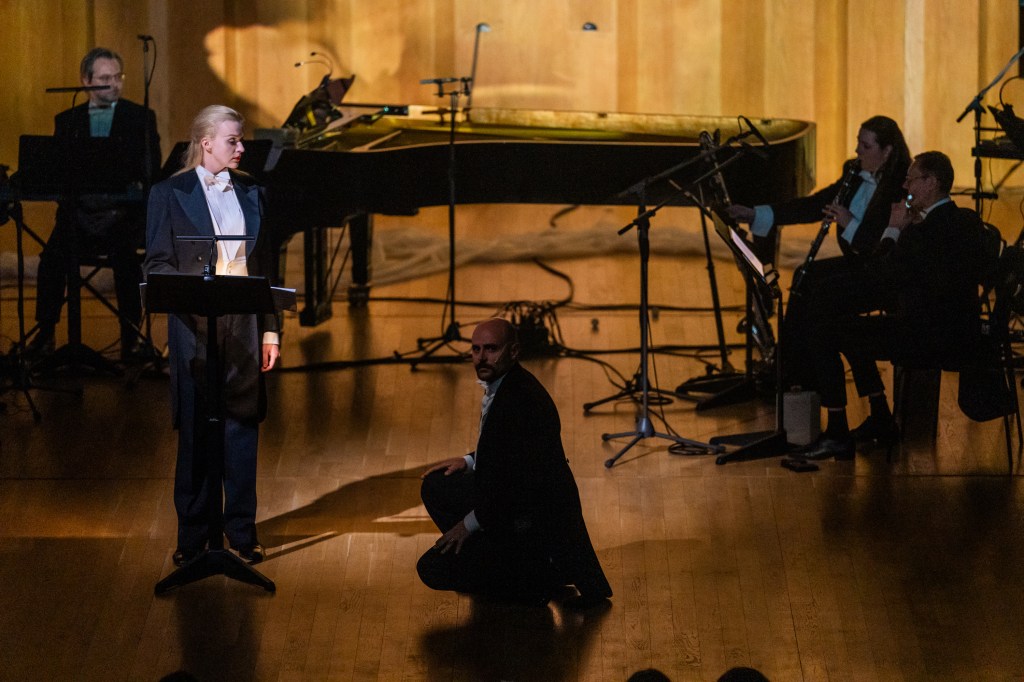
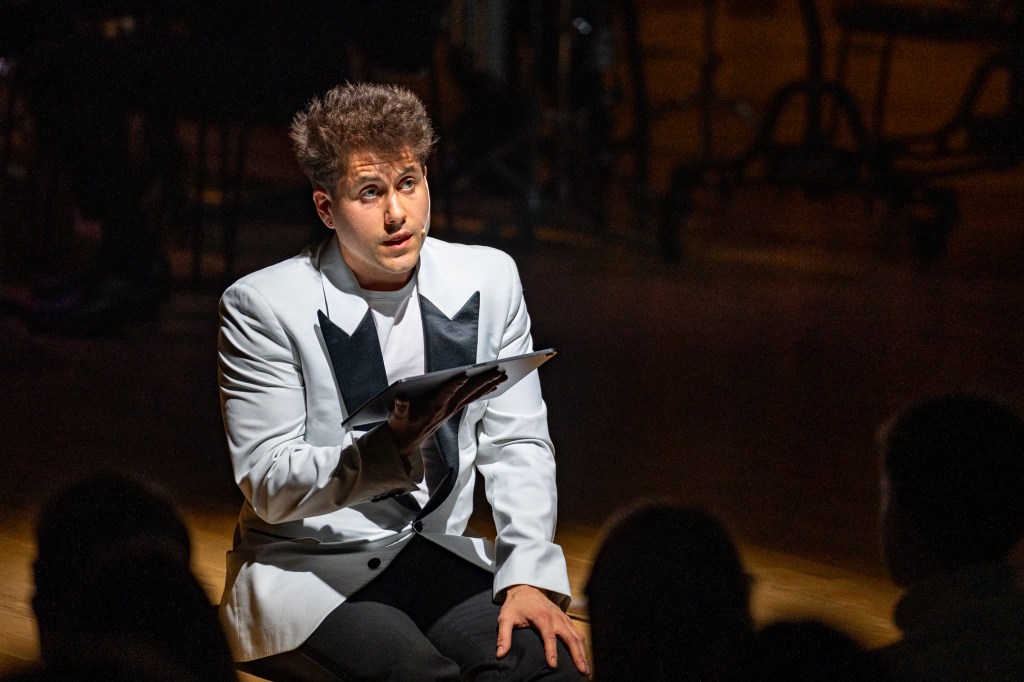
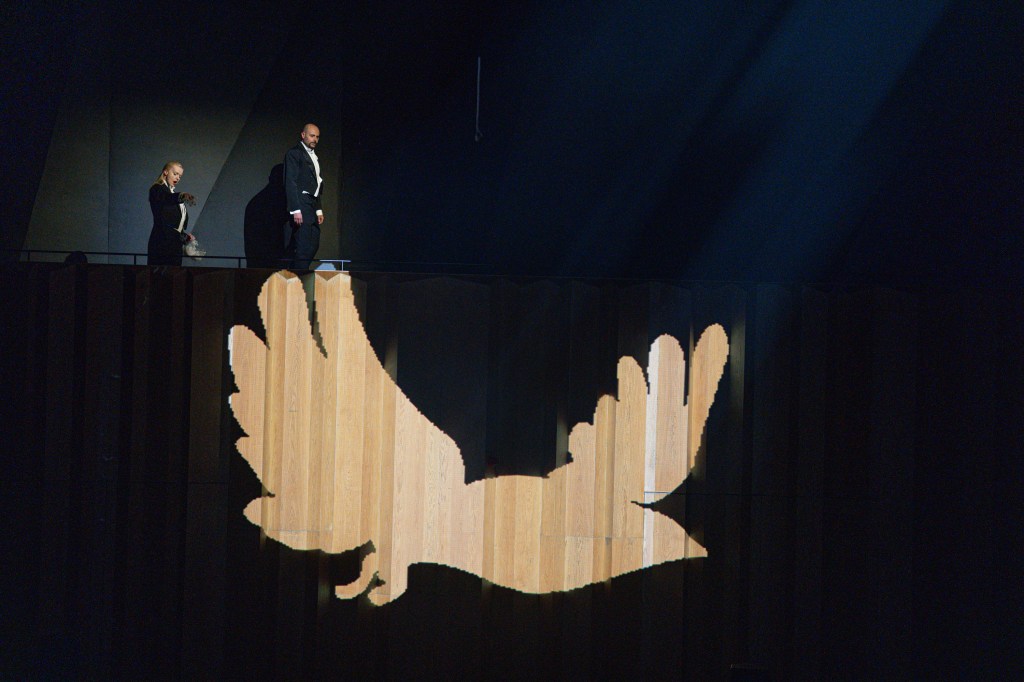
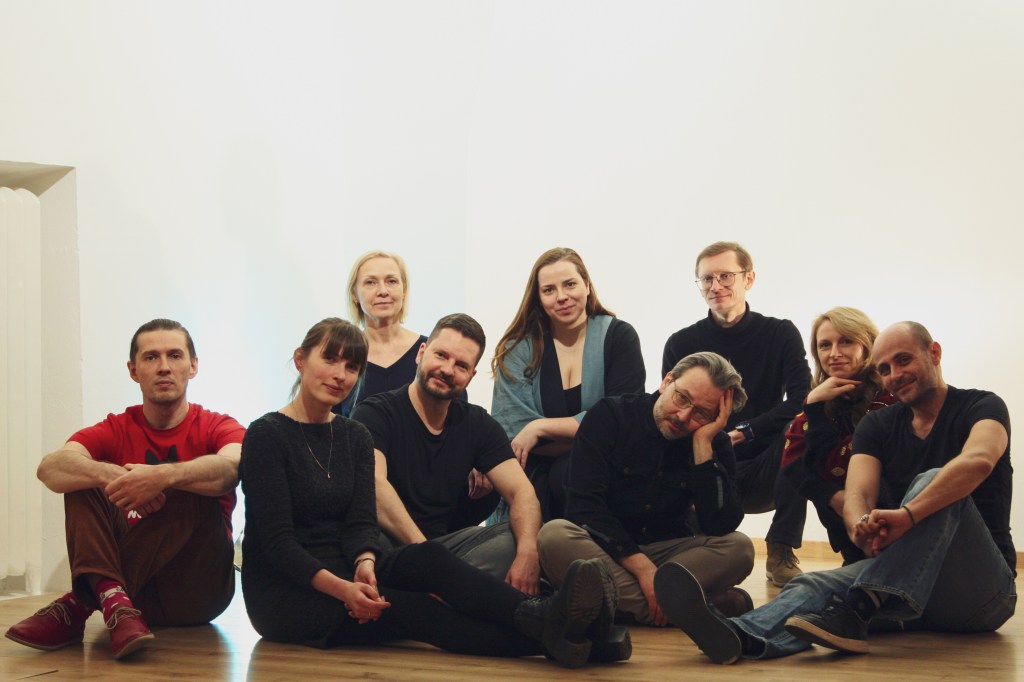
Photos by Andres Teiss




Liisa Hõbepappel (libretto, music)
Eva Koldits (libretto, stage direction)
Ensemble U: (performance, musical collaboration)Nicholas Tamagna (countertenor, USA/Italy/Germany)
Salomėja Petronytė (soprano, Lithuania) Ryan Adams (tenor, USA)Lighting Design: Kristiina Tang
Video Design: Lucy GohmPsychological Consultation: Kati-Riin Simisker
Co-production: Liisa Hõbepappel, Estonian Music Days, Ensemble U:
Chamber opera and inner worlds
The Dustborn takes its starting point from the fairy tale The Seven Brothers, but instead of presenting the characters on stage, it interprets the states of mind they represent. The opera examines inner voices, psychological tension, and the importance of awareness of one’s own inner world.
The work is not primarily about mental health, yet it addresses the topic artistically. Psychiatrist and psychodrama director Kati-Riin Simisker was part of the creative process, helping to ensure these themes were treated with clarity and sensitivity.
Video by Tammo Sumera
Co-Creation as a key element
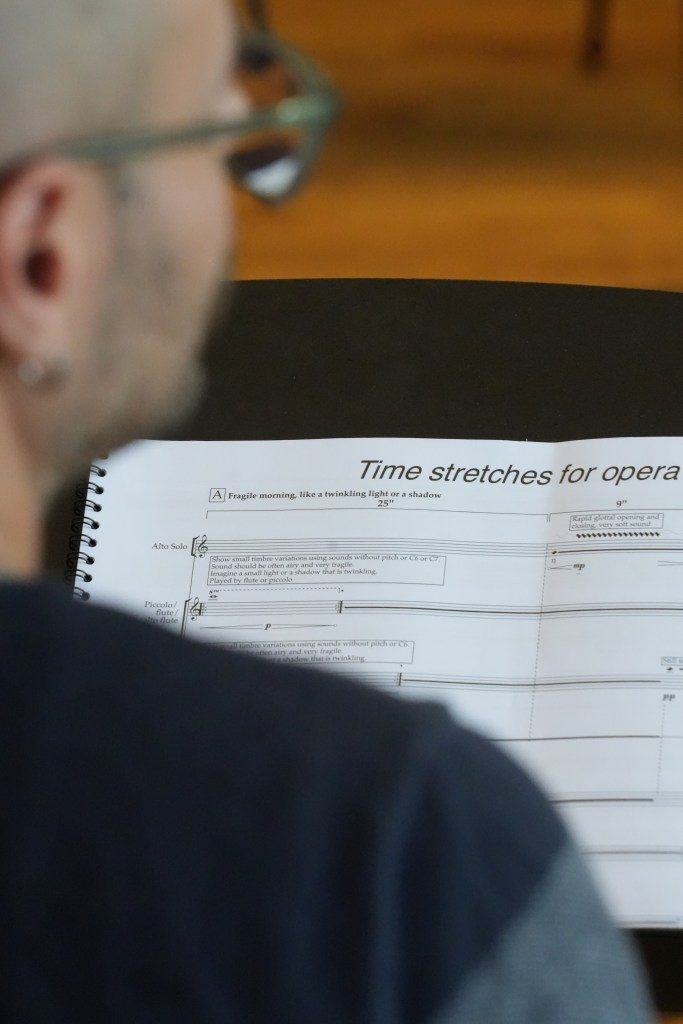
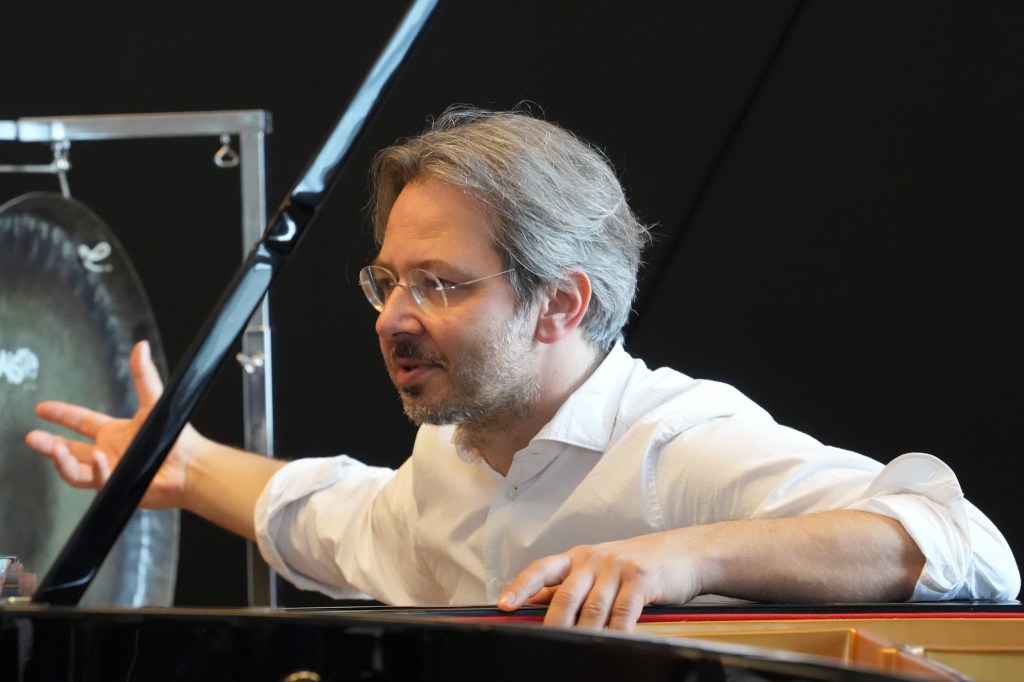
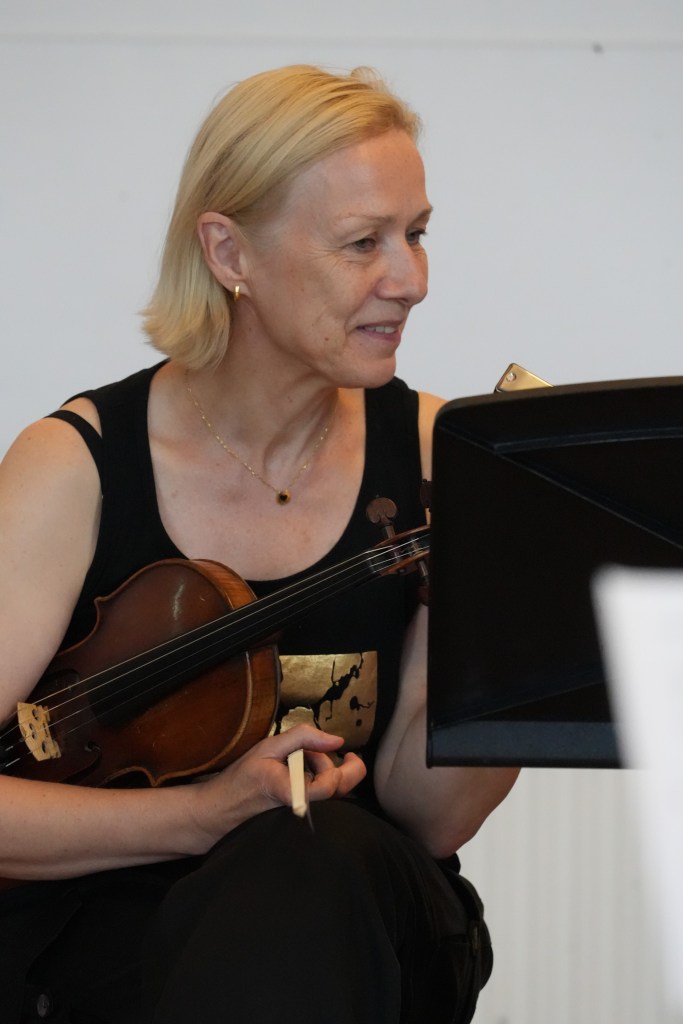
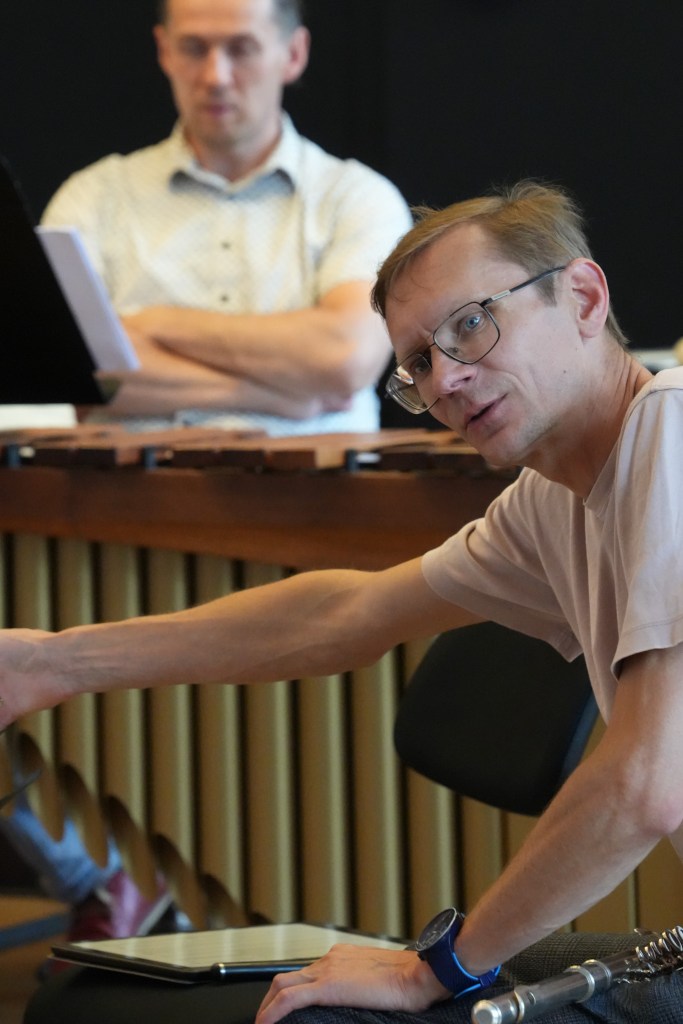
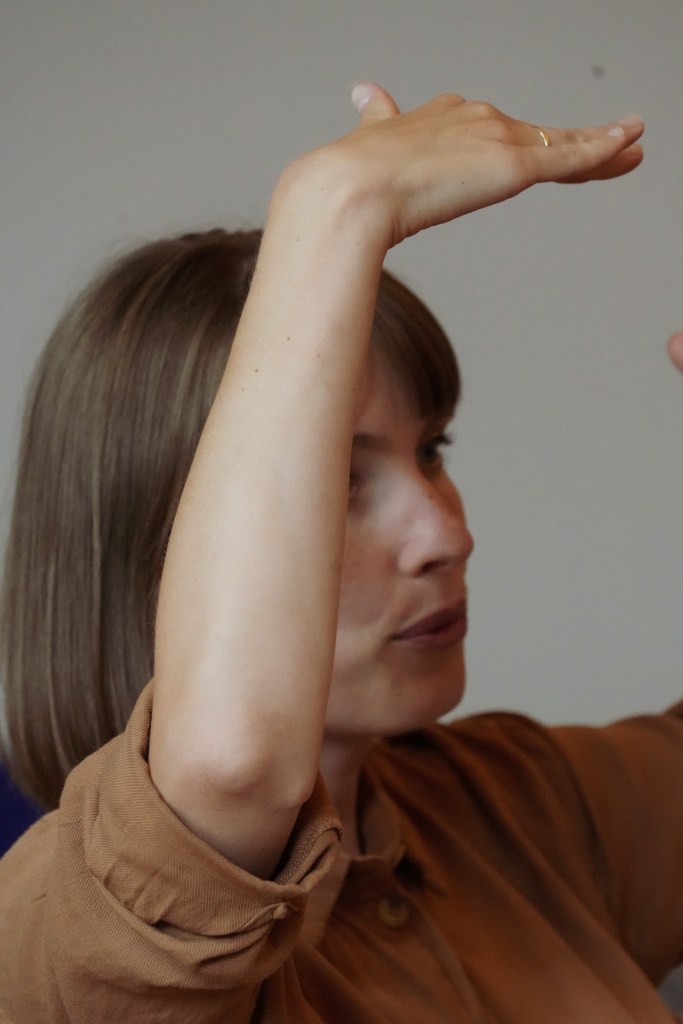
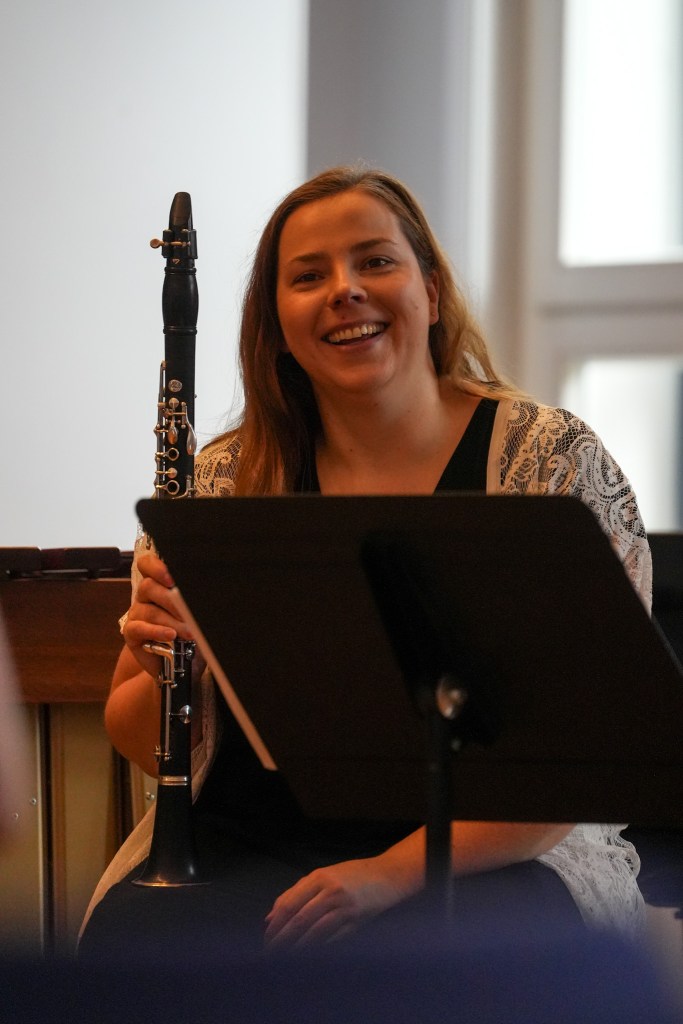
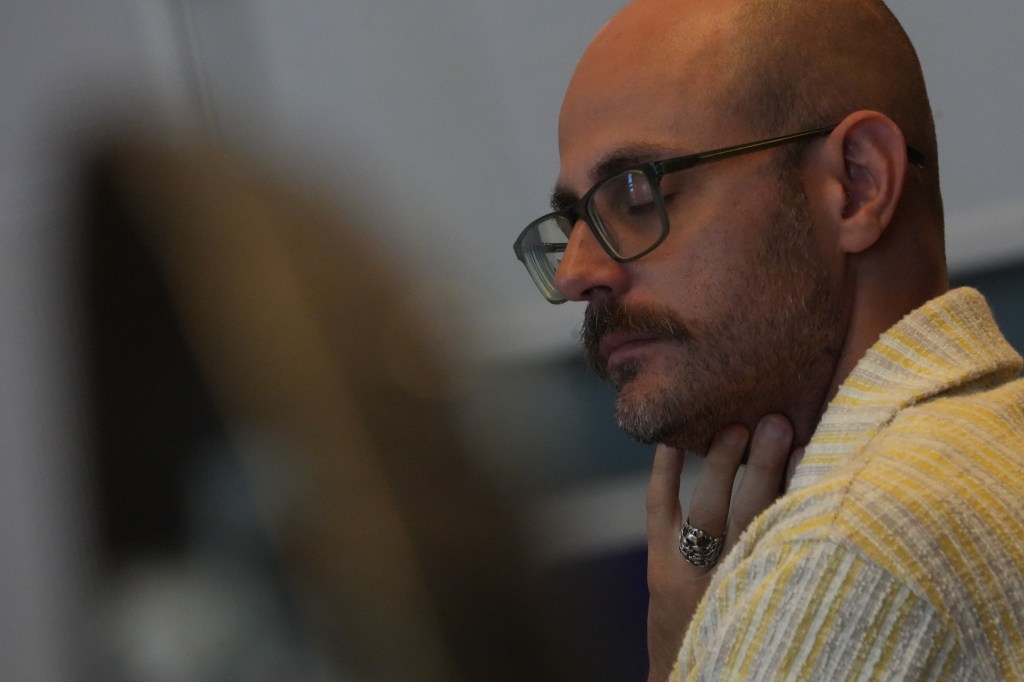
Unlike traditional opera—where the libretto is written first, followed by music and staging—The Dustborn grew out of an experimental, collaborative process. Rather than starting with a finished text, the team began with improvisations, gradually shaping both the musical and dramaturgical language together. The process continued throughout winter and spring, with evolving material shared publicly during Residentuu:r sessions at the Estonian Center for Contemporary Music.

A bright contemporary voice from Lithuania
The soprano in this opera is Salomėja Petronytė, one of the most prominent young sopranos from Lithuania with a passion for contemporary music and opera. Petronytė is currently pursuing a doctorate at the Lithuanian Academy of Music and Theatre, focusing on Lithuanian contemporary vocal music. Her participation in this project marks an important step in Estonian–Lithuanian artistic collaboration, born through the Baltic Contemporary Opera Network.
Contact us
If you are interested in presenting a fully staged version of the work, we’d love to hear from you. Please get in touch: liisa.hobepappel@gmail.com or u@uuu.ee.
 LIISA HÕBEPAPPEL